
VISITOR MANAGEMENT SOFTWARE
Fridge, Microwave, Visitor Management - Is The AI Real, Or Just Noise?
Every product claims AI now, and most of it is the same feature with a new label stuck on. Before trusting the claim, it's worth asking one question: does this actually change how the work gets done, or does it just sound better in a pitch?
In visitor management, a handful of AI capabilities genuinely earn the label. Here's what they actually do.
See Your Front Desk, Smarter.
350+ Enterprise customers across all products



Facial Recognition
The front desk queue is usually the first place visitor management breaks down - people waiting, forms half-filled, a line forming during peak hours. Facial recognition removes that entirely. It's zero-touch, it's instant, and it gets a visitor through the gate in the time it takes to glance at a camera.
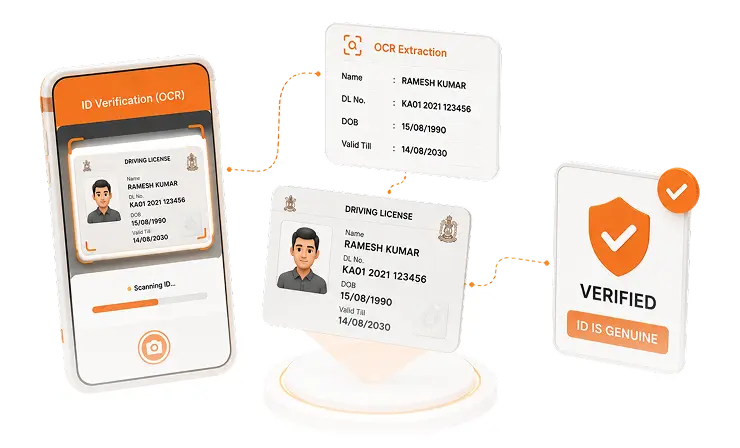
ID Verification (OCR)
Anyone can attach a photo at check-in. The question is whether that photo is actually checked. OCR reads the ID at the point of upload and verifies it's genuine — not just present. It's the difference between collecting a document and actually confirming one.
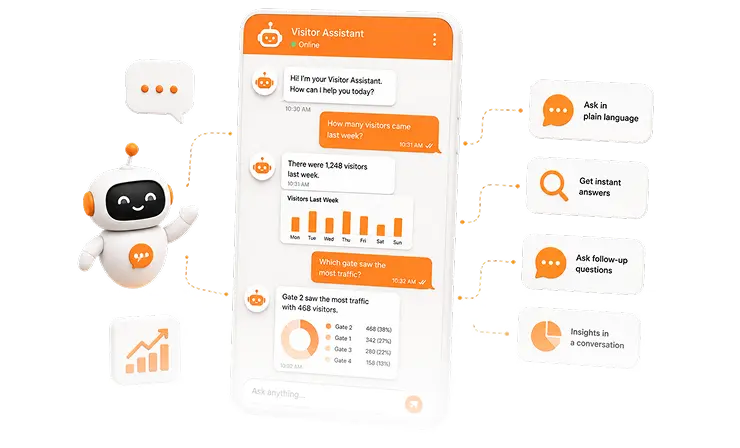
Conversational Chatbot
Simple questions - how many visitors came last week, which gate saw the most traffic - shouldn't require opening a report and searching through filters. A conversational chatbot lets you ask directly, in plain language, and follow up with another question the same way, without ever leaving the conversation.
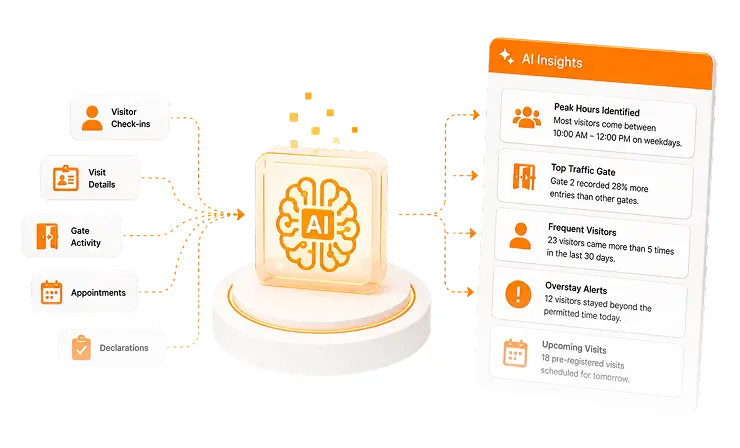
AI Insights
Visitor data adds up fast, and most of it never gets looked at properly because turning it into something useful takes effort. AI insights do that translation automatically - large volumes of activity, summarized into clear, plain-English takeaways, without anyone having to build a report.
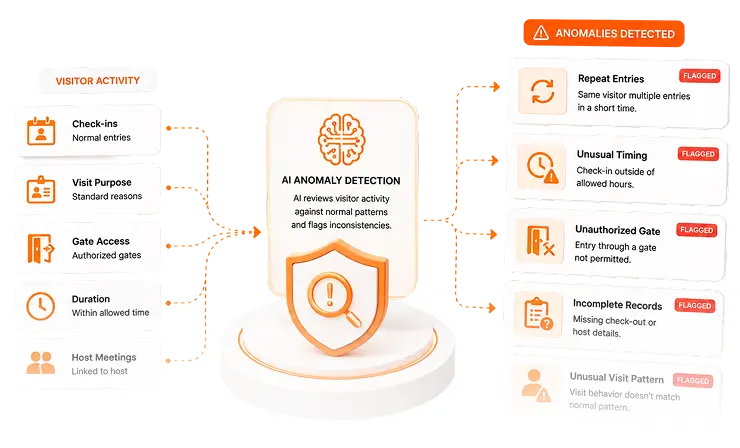
Anomaly Detection
Every organization has a standard process for how visitors should be handled. AI can quietly check whether that process is actually being followed - flagging repeat entries that don't fit a normal pattern, or records with gaps that technically pass validation but don't hold up on a closer look. The kind of inconsistency a manual review would likely miss.